Trump rallied Ukraine
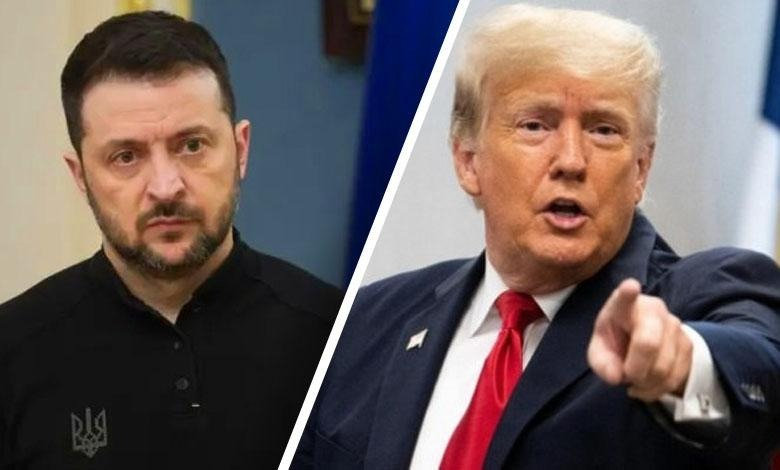
The aftermath of Zelensky and Trump meeting at the White House in ExtremeScan survey
The press release is based on a completed survey in Russia and Ukraine.
The ExtremeScan research group conducted a study in Russia and Ukraine on the current stage of ceasefire negotiations between Russia and Ukraine, the consequences of military actions in both countries, readiness for peace, attitudes of nations towards each other, the influence of political leaders on the peace process, and the acceptability of ceasefire scenarios.
The survey in Russia was conducted from February 20 to 26, 2025.
The survey in Ukraine was conducted from February 26 to March 4, 2025.
Question 1. I will read a list of leaders from different countries. Please rate on a scale from 1 to 5 how much the conflict resolution between Russia and Ukraine depends on each. 1 - does not depend at all, 5 - fully depends.
Average rating on a scale from 1 to 5
| Ukraine | Russia | |
|---|---|---|
| Donald Trump | 3.6 | 4.3 |
| Vladimir Putin | 3.9 | 4.8 |
| Volodymyr Zelensky | 4.0 | 2.0 |
| Xi Jinping | 3.2 | 3.3 |
| Emmanuel Macron | 3.5 | 1.9 |
Top 2: Share of respondents who rated 4 or 5
| Ukraine | Russia | |
|---|---|---|
| Donald Trump | 61% | 78% |
| Vladimir Putin | 67% | 94% |
| Volodymyr Zelensky | 72% | 18% |
| Xi Jinping | 41% | 41% |
| Emmanuel Macron | 57% | 8% |
Question 2. In your opinion, whose side is US President Donald Trump on in the ceasefire negotiations? Is he more on the side of Russia or Ukraine?
| Ukraine* | Russia | |
|---|---|---|
| On Russia’s side | 72% | 43% |
| On Ukraine’s side | 8% | 10% |
| On the side of US/self-interest (the option has not been stated) | 11% | 32% |
| Difficult to answer | 9% | 14% |
- Based on data from March 1-4, 2025, i.e., after the meeting between Zelensky and Trump at the White House.
Ukraine. Changes in the context of the White House meeting
| Before the meeting | After the meeting | |
|---|---|---|
| On Russia’s side | 49% | 72% |
| On Ukraine’s side | 15% | 8% |
| On the side of US/self-interest (the option has not been stated) | 19% | 11% |
| Difficult to answer | 17% | 9% |
Question 3. To what extent do you trust Donald Trump?
| Ukraine* | Russia | |
|---|---|---|
| Trust | 8% | 20% |
| Do not trust | 89% | 74% |
| Difficult to answer | 3% | 7% |
- Based on data from March 1-4, 2025, i.e., after the meeting between Zelensky and Trump at the White House.
Ukraine. Changes in the context of the White House meeting
| Before the meeting | After the meeting | |
|---|---|---|
| Trust | 15% | 8% |
| Do not trust | 81% | 89% |
| Difficult to answer | 4% | 3% |
Question 4. How do you feel about Donald Trump’s proposal to exchange US military aid for the right to exploit Ukraine’s natural resources?
| Ukraine | |
|---|---|
| Agree | 38% |
| Disagree | 58% |
| Difficult to answer/Refused to answer | 4% |
Question 5. Do you support holding presidential elections during martial law?
| Ukraine | |
|---|---|
| Support | 22% |
| Do not support | 77% |
| Difficult to answer/Refused to answer | 1% |
Question 6. Do you approve or disapprove of Volodymyr Zelensky’s foreign policy and his position in negotiations?
| Ukraine | |
|---|---|
| Approve | 82% |
| Do not approve | 13% |
| Difficult to answer/Refused to answer | 5% |
Ukraine. Changes in the context of the White House meeting
| Before the meeting | After the meeting | |
|---|---|---|
| Approve | 80% | 84% |
| Do not approve | 13% | 14% |
| Difficult to answer/Refused to answer | 7% | 2% |
Question 7. How do you evaluate the conduct of Volodymyr Zelensky and his team during the White House meeting on February 28?
| Ukraine | |
|---|---|
| The actions of Volodymyr Zelensky and/or the diplomatic service harmed Ukraine | 16% |
| Volodymyr Zelensky acted appropriately | 78% |
| Other | 2% |
| Difficult to answer | 4% |
Question 8. How do you evaluate the conduct of Donald Trump and his team during the White House meeting on February 28?
| Ukraine | |
|---|---|
| Trump’s team organized this provocation as an excuse to deny military aid to Ukraine | 60% |
| Trump’s team would not support Ukraine regardless of Zelensky’s conduct | 28% |
| Trump’s team wanted to support Ukraine, but the conflict with Zelensky spoiled the relationship | 7% |
| Other | 2% |
| Difficult to answer | 2% |
Question 9. What is strategically more important for Ukraine: relations with European countries or the US?
| Ukraine | |
|---|---|
| European countries | 70% |
| The US | 13% |
| Both are important | 14% |
| Difficult to answer | 3% |
Question 10. What is strategically more important for Russia: good relations with Western countries or Eastern and Southern countries?
| Russia | |
|---|---|
| Rather, with Western countries | 17% |
| Rather, with Eastern and Southern countries | 34% |
| Both are important | 26% |
| Difficult to answer | 22% |
| Refused to answer | 1% |
Question 11. When do you think the war between Russia and Ukraine will end – in a few months, in six months, in a year, in more than a year, or will it never end?
| Ukraine | Russia | |
|---|---|---|
| In a few months | 17% | 24% |
| In six months | 15% | 19% |
| In a year | 12% | 17% |
| In more than a year | 22% | 15% |
| It will never end | 12% | 6% |
| Difficult to answer/Refused to answer | 22% | 20% |
Question 12. For what time frame do you generally plan your life?
| Ukraine | Russia | |
|---|---|---|
| I do not plan at all | 38% | 25% |
| For a few months | 14% | 18% |
| For six months | 7% | 7% |
| For a year | 8% | 13% |
| For several years | 23% | 29% |
| Difficult to answer | 10% | 8% |
| Refused to answer | 1% | 0% |
Ukraine. Changes in the context of the White House meeting
| Before the meeting | After the meeting | |
|---|---|---|
| I do not plan at all | 35% | 43% |
| For a few months | 15% | 11% |
| For six months | 8% | 6% |
| For a year | 9% | 6% |
| For several years | 25% | 21% |
| Difficult to answer | 8% | 12% |
| Refused to answer | 0% | 1% |
Fieldwork in Russia was conducted from February 20 to 26, 2025. Fieldwork in Ukraine was conducted from February 26 to March 4, 2025. From March 2 to 4, three additional questions about the meeting between D. Trump and V. Zelensky at the White House were added to the survey.
Russia
Sample size – 1,200 respondents. The survey was conducted using the CATI method (computer-assisted telephone interviews) based on a random sample of mobile phone numbers. RDD, according to Roskomnadzor data, is stratified by federal districts and two federal-level cities. The sample is representative of the adult population of Russia (18 years and older) by gender, age, and federal district. The estimated sampling error is 2.81% at a 95% confidence level.
Ukraine
Sample size – 1207 respondents. The survey was conducted using the CATI method (computer-assisted telephone interviews) based on a random sample of mobile phone numbers generated by RDD. The sample is representative of the adult population of Ukraine (18 years and older) by gender, age, settlement size, and region of residence before the full-scale Russian invasion of Ukraine. The survey was conducted only in Ukrainian-controlled territories. The estimated sampling error does not exceed 2.8% at a 95% confidence level.